
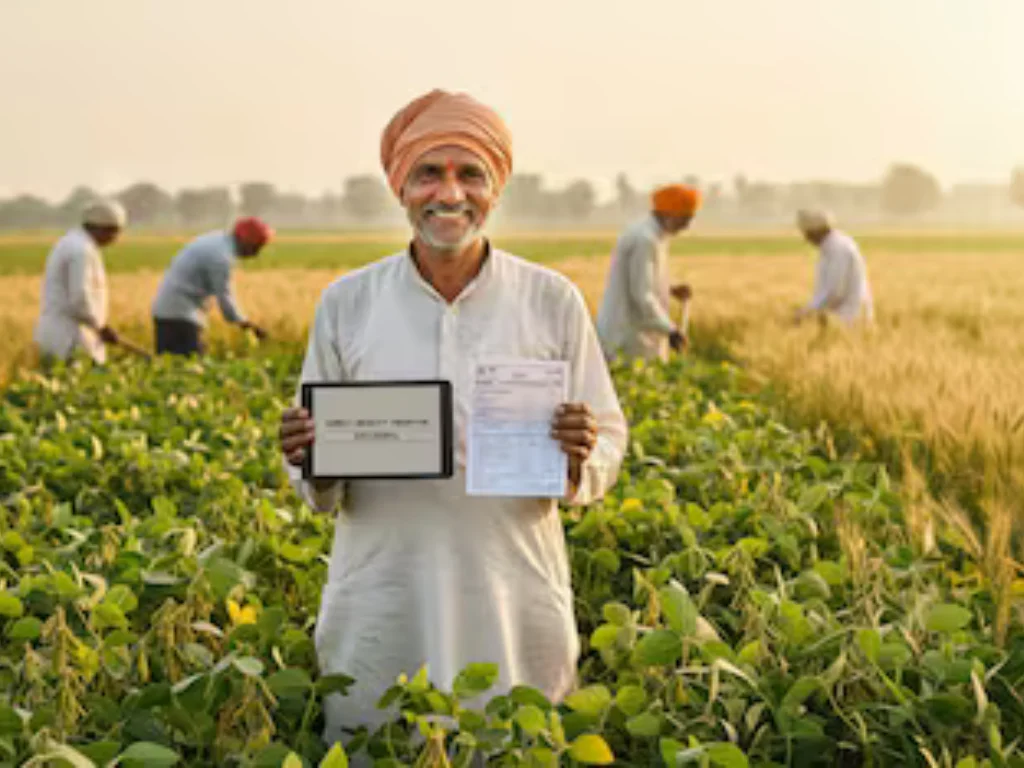
Launched in 2016 by the Agriculture Ministry, a ten-year report highlights PMFBY's pivotal role in safeguarding Indian farmers.
Key Highlights
- Subsidized Premium Structure: Nominal premium caps of 2% for Kharif, 1.5% for Rabi, and 5% for commercial crops are borne by farmers, while the remaining actuarial cost is shared by Central and State governments.
- Decade of Substantial Outreach: Over 92.46 crore farmer applications have been insured over the past 10 years, resulting in claim disbursements exceeding ₹2.06 lakh crore to 26.33 crore beneficiaries.
- Comprehensive Risk Mitigation: Entire crop lifecycles are protected—ranging from prevented sowing and standing crop damage to localized natural calamities and post-harvest losses up to 14 days.
- Tech-Driven Transparency: Automated claim settlements are processed via DigiClaim, supported by satellite-based yield estimation (YES-TECH) and block-level weather monitoring (WINDS).
Pradhan Mantri Fasal Bima Yojana (PMFBY) was launched on February 18, 2016, by the Ministry of Agriculture and Farmers Welfare, replaced earlier crop insurance schemes, including the National Agricultural Insurance Scheme (NAIS) and the Modified National Agricultural Insurance Scheme (MNAIS), with a more comprehensive framework for managing agricultural risks.
According to official reports marking 10 years of scheme execution (Kharif 2016 to Rabi 2025-26), a total budget allocation of ₹12,200 crore was released for FY 2026-27 to reinforce agricultural risk resilience nationwide.
Over 92.46 crore farmer applications have been insured during this decade-long period, and claims amounting to over ₹2.06 lakh crore have been successfully disbursed to 26.33 crore applicant accounts. The scheme is executed under an actuarial risk-sharing framework where statutory government subsidies bridge the differential between capped farmer rates and market premiums.

Inclusive Coverage: Reaching Every Cultivator
Universal access is extended to all cultivators growing notified crops within designated operational units. Sharecroppers and tenant farmers possess full eligibility upon presentation of valid land tenure or sowing documentation.
Two primary categories of cultivators are accommodated under the institutional mechanism:
• Loanee Cultivators: Insurance coverage is automatically linked to active Kisan Credit Card (KCC) seasonal loans through financial institutions.
• Non-Loanee Cultivators: Voluntary enrollment is conducted through Common Service Centres (CSCs), the National Crop Insurance Portal (NCIP), or authorized insurance intermediaries.
A 50% average voluntary non-loanee participation rate has been recorded over the past decade, demonstrating widespread public trust in the state-backed safety net.
Full Crop-Cycle Protection Against Risks
Four distinct operational phases of the agricultural cycle are insured against non-preventable natural perils:
1. Prevented Sowing: Compensation up to 25% of the total sum insured is granted if severe weather precludes crop cultivation.
2. Standing Crop Losses: Area-wide yield depletion caused by drought, inundation, floods, pests, or disease outbreaks is comprehensively indemnified.
3. Localized Calamities: Farm-level damage resulting from hailstorms, landslides, cloudbursts, or natural fires is individually assessed and compensated.
4. Post-Harvest Losses: Cut-and-spread crops drying in open fields remain protected for up to 14 days post-harvest against unseasonal rains and cyclonic events.
Technology-Driven Transparent Claim Payouts
Administrative delays have been minimized through advanced technological integration across survey and disbursement channels:
• YES-TECH (Yield Estimation System based on Technology): Objective crop yield assessments are generated utilizing satellite remote sensing and machine learning models.
• WINDS (Weather Information Network and Data System): Hyperlocal climatic records are captured continuously via automated weather stations at block and Gram Panchayat levels.
• DigiClaim Module: Automated claim calculations are processed through Public Financial Management System (PFMS) channels for direct bank account transfers.
• Krishi Rakshak Helpline (14447): A dedicated national grievance portal has resolved 26.12 lakh farmer issues with a recorded 99.66% resolution rate.
To sustain agricultural stability amidst accelerating climate volatility, PMFBY must further streamline state subsidy releases and mandate strict timelines for automated claim settlements.
By embedding satellite-driven analytics and universalizing digital land record integration, the scheme will continue to serve as India's cornerstone for climate-resilient farming and rural income security.
Share this Perspective
Spread rigorous policy evaluation across your professional networks.