

A parking dispute in East Delhi escalated into allegations, protests and disciplinary action, raising questions about policing, conduct and accountability.
Key Highlights
- A parking disagreement outside a salon in Rohtash Nagar on October 23, 2026, triggered a chain of confrontations.
- Lawyers alleged that ACP Manasvi Vashishta displayed his service revolver during a dispute at Shahdara police station; the allegation remains subject to investigation.
- Police registered a separate case alleging that lawyers misbehaved with officers and obstructed government work.
- Transfers of the ACP and the Shahdara SHO triggered protests by lawyers and subsequently by police personnel.
- The controversy raises questions about police accountability, lawyers' professional responsibilities, the use of force and the importance of independent investigation.
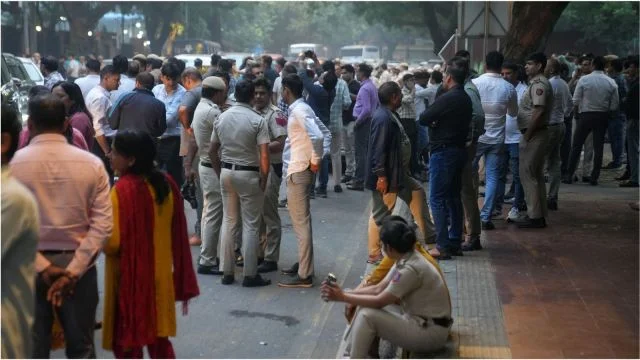
When Law Enforcers Become Part of the Dispute
A dispute over a motorcycle parked outside a salon in East Delhi would ordinarily have been expected to end with a complaint, an investigation and, if necessary, legal proceedings.
Instead, an incident in Rohtash Nagar developed into a confrontation involving lawyers, police officers, allegations of assault, a disputed firearm incident, protests and disciplinary action.
The controversy surrounding Assistant Commissioner of Police (ACP) Manasvi Vashishta and the Shahdara police station has brought an important institutional question into public discussion: what happens when two groups entrusted with upholding the law become parties to a dispute over its enforcement?
Police officers are responsible for maintaining public order, protecting citizens and investigating offences without fear or favour.
Lawyers, meanwhile, play an essential role in ensuring access to justice, representing individuals and holding public authorities accountable through legal processes. Both institutions are necessary to the functioning of the justice system.
Neither responsibility gives anyone the right to intimidate, assault, threaten or obstruct another person. A police uniform does not place an officer above the law, just as a lawyer's professional status does not provide immunity from legal accountability.
The East Delhi incident is therefore more than a disagreement between two professional groups. It is a test of institutional discipline, professional conduct and public confidence in the justice system.
How Did the Dispute Begin?
The parking disagreement outside a salon
The sequence of events began around 11 a.m. on October 23, 2026, when Sheetal Thakur and her husband, Rahul, reportedly found a motorcycle blocking the entrance to their salon in Rohtash Nagar.
The couple objected to the parking and asked the person concerned to move the two-wheeler. An argument followed.
Sheetal's sister, Shweta Bhati, alleged that the disagreement later escalated when a group of lawyers reached the salon, damaged property and assaulted Sheetal, who was reportedly eight months pregnant. The family said it contacted the police and approached Shahdara police station to register a complaint.
These are allegations made by the family and should not be treated as established findings.
The incident also involved another account of physical violence. According to the lawyers' version, advocate Lalit Bansal sustained a serious head injury during a scuffle connected with the dispute.
An FIR was registered on a complaint by advocate Amulya Ratan, and Rahul, the salon owner, was named as an accused.
The two accounts reveal how a local disagreement developed into competing allegations of assault. Establishing what happened, who was involved and whether the police acted impartially requires examination of the evidence rather than reliance on the claims of either side.
The Shahdara Police Station Confrontation
The dispute moved from the street to the police station, where the responsibilities of law enforcement and the rights of complainants came into direct conflict.
According to the lawyers' account, advocates visited Shahdara police station to seek action against those allegedly involved in the assault on Lalit Bansal.
They claimed that the police had assured them that the accused would be arrested but that they subsequently learnt the individuals had not been arrested and had reportedly been released.
The lawyers alleged that when they returned to question the handling of the matter, ACP Manasvi Vashishta displayed his service revolver and threatened or intimidated those present.
This allegation became one of the central issues in the controversy. The Coordination Committee of All District Courts Bar Associations of Delhi described the alleged display of the revolver as serious misconduct and demanded action against the ACP and other concerned officers.
The police presented a counter-version.
According to the complaint filed by ACP Vashishta, around 15 to 20 lawyers entered the SHO's room, misbehaved with police personnel, used abusive language and attempted to obstruct official work.
The complaint also alleged that one lawyer tried to pull the SHO by the hand and that accusations of corruption were made against the officers.
A separate case was registered against lawyers over the alleged misconduct and obstruction.
The two accounts differ significantly. The allegations concerning the display of the service weapon, the conduct of lawyers and the handling of the original assault complaint require an impartial investigation. The available reporting does not establish that the revolver was fired.
From a Police Station Dispute to a Professional Standoff
The confrontation did not remain limited to the individuals directly involved. It soon developed into a wider disagreement between the police administration and the legal fraternity.
Lawyers announce an indefinite strike
The Coordination Committee of All District Courts Bar Associations of Delhi announced that lawyers would abstain from judicial work, initially describing the action as indefinite.
The lawyers demanded action against ACP Vashishta, the Shahdara SHO and other officers they considered responsible for the incident. Their demands included disciplinary action and an impartial investigation into the alleged display of the revolver.
The strike affected the normal functioning of district courts and brought attention to the relationship between police stations and legal practitioners.
On October 28, Delhi Police transferred ACP Vashishta to the Special Police Unit for Women and Children (SPUWAC), while Inspector Arun Kumar, the then SHO of Shahdara police station, was transferred to the security unit.
The transfers came amid pressure from the lawyers' associations. The strike was subsequently called off after the transfer orders.
However, the administrative action did not end the controversy. Instead, it created discontent among sections of the police force, who viewed the transfers as unfair treatment of officers performing their duties.
Why Did Delhi Police Personnel Protest?
The November 2 demonstration
On November 2, several Delhi Police personnel assembled outside the Police Headquarters (PHQ) to protest against the transfer of ACP Vashishta and Inspector Arun Kumar.
The demonstration initially involved around 100 to 150 personnel, with reports indicating that the gathering grew and a larger group later participated in a meeting with senior officers.
The protesters demanded a meeting with Police Commissioner Anurag Kumar and raised concerns about the treatment of police personnel during confrontations with lawyers, pressure during investigations and the absence of a suitable grievance-redressal mechanism.
A delegation met senior officers and submitted five demands. These included action against lawyers allegedly involved in the Shahdara incident and measures to address misconduct and intimidation faced by police personnel.
The protesters also raised a broader question: should police officers be expected to maintain discipline and carry out investigations when they believe they are being threatened or pressured by influential individuals?
Their concerns deserve to be examined through an appropriate institutional mechanism. Police personnel, like other public servants, must have access to a fair process for reporting threats, interference and workplace misconduct.
However, the method of protest also matters. A police force is a disciplined institution entrusted with maintaining public order. Its members cannot treat an internal administrative disagreement as an ordinary street demonstration without considering the rules governing their service.
The presence of a senior police officer who was himself affected by the transfer decision added another dimension to the protest.
The ACP's Suspension and the Second Controversy
On November 3, the Ministry of Home Affairs suspended ACP Manasvi Vashishta following his participation in the demonstration outside Police Headquarters. Reports described the action as being taken on grounds of violation of discipline.
The suspension created a second controversy, separate from the original allegation concerning the service revolver.
During the November 2 protest, certain remarks allegedly made by the ACP about lawyers attracted further criticism. A lawyer subsequently raised the matter before the Delhi High Court, referring to alleged derogatory expressions and a threatening reference to an AK-47.
It is important to distinguish this allegation from the earlier revolver episode. The AK-47 reference concerned alleged verbal remarks during the protest; it was not a report of the ACP physically brandishing an AK-47.
On November 3, the Delhi High Court declined to take suo motu cognisance of the matter and asked the lawyers to file a formal petition. The Court indicated that it would examine the issue through the appropriate legal process.
On November 5, reports stated that the High Court had agreed to hear a petition seeking action against the suspended ACP and other personnel over the alleged remarks. The hearing was scheduled for November 6.
The developments underline how an internal police dispute can acquire wider legal and institutional consequences when public statements, professional dignity and allegations of threats become part of the controversy.
Police Duty: Authority Must Come with Accountability
The police are among the most visible representatives of the state. Citizens approach police stations during emergencies, disputes, accidents, crimes and situations in which they feel vulnerable.
This gives police officers considerable authority, but that authority is accompanied by legal and professional responsibilities.
1. Impartial registration and investigation of complaints
Every complaint must be dealt with according to law and the available evidence. The identity, profession, social position or influence of a complainant should not determine the quality of police action.
Where allegations are made by more than one side, investigators must examine each complaint independently. The police must not allow pressure from lawyers, local groups, political actors or influential individuals to determine the outcome.
2. Responsible use of firearms
A service weapon is issued to a police officer for official duties and lawful use. It is not an instrument for settling arguments, intimidating complainants or demonstrating authority.
The handling, carrying and use of firearms are governed by applicable laws, service rules and operational instructions. Any allegation that an officer displayed a weapon to threaten an individual deserves serious scrutiny.
An investigation should examine witness accounts, available CCTV footage, official records and any other relevant evidence. If misconduct is established, appropriate criminal or departmental action should follow.
3. Protection of people inside police stations
A police station should remain a place where citizens can approach authorities without fear.
Physical intimidation, assault, threats or obstruction inside a police station undermine its basic purpose. Police personnel must protect complainants, witnesses, accused persons and visitors while ensuring that legal procedures are followed.
4. Discipline within the force
Police officers are public servants operating under a formal chain of command. Disagreements about transfers, investigations or departmental decisions should be addressed through established service procedures.
An officer's right to raise a grievance does not remove the responsibility to follow disciplinary rules. Equally, the administration must ensure that legitimate complaints by police personnel are heard fairly and without retaliation.
The Role of Lawyers: Professional Independence and Responsibility
Lawyers are an essential part of the justice system. They represent clients, challenge unlawful actions, assist courts and help citizens understand their legal rights.
Their independence is necessary for the rule of law. However, professional independence should not be confused with immunity from legal responsibility.
1. The right to question police action
Lawyers can approach police authorities when they believe that an investigation is being delayed, evidence is being ignored or a complainant is not receiving a fair response.
They may submit representations, seek legal remedies and approach courts. These are legitimate ways to raise concerns.
2. No privilege to obstruct an investigation
A lawyer's professional status does not permit physical intimidation, assault, threats or obstruction of police personnel performing lawful duties.
If misconduct occurs, it must be investigated under the same legal standards that apply to other citizens.
3. Professional conduct inside police stations
Disagreements with investigating officers should be handled through lawful communication and formal remedies. Entering a police station in a large group and attempting to pressure officers can create an environment in which impartial investigation becomes difficult.
At the same time, police officers must not treat legitimate questioning by lawyers as an act of hostility.
4. Strikes and the interests of litigants
Lawyers' strikes can affect the functioning of courts and delay justice for ordinary litigants.
In Ex-Capt. Harish Uppal v. Union of India (2002), the Supreme Court held that lawyers have no general right to strike or boycott court work. The judgment emphasised that such actions should not interfere with the administration of justice.
This principle is relevant because a professional dispute between lawyers and police should not leave citizens waiting indefinitely for hearings, bail applications, trials and other judicial services.
The legal profession has a responsibility to defend the rights of its members while protecting the interests of the people who depend on the courts.
What Does the Constitution Say?
The controversy also invites a wider discussion about constitutional values and the responsibilities of public institutions.
Article 14 – Equality before law
Every individual is entitled to equality before the law and equal protection of the laws. Neither a police officer nor a lawyer can claim a position above ordinary legal accountability.
Article 19 – Freedom of expression and peaceful assembly
The Constitution protects freedom of speech and expression, as well as the right to assemble peacefully and without arms, subject to reasonable restrictions under the Constitution.
These rights do not create an unrestricted entitlement to disrupt public order or disregard applicable service and disciplinary rules.
Article 21 – Protection of life and personal liberty
The right to life and personal liberty is central to the protection of individuals against arbitrary or unlawful state action. Public authorities must act within the framework of law and respect human dignity.
These constitutional principles apply to the entire process: from the registration of complaints to the investigation, treatment of witnesses, disciplinary proceedings and judicial review.
The Importance of Independent Investigation
When allegations involve police officers and members of the legal profession, public confidence depends on the credibility of the investigation.
An investigation conducted only through competing statements may not be sufficient to establish what happened inside a police station or during a confrontation.
Several forms of evidence may be important:
- CCTV footage from the police station, including the entrance, corridors and relevant rooms, where available.
- Statements from police personnel, lawyers, complainants and independent witnesses.
- Medical records relating to the reported injuries.
- The original complaints, FIRs and subsequent case diaries.
- Official records concerning the service weapon and relevant departmental procedures.
- Available video recordings of the November 2 protest and the statements attributed to the ACP.
The investigation should establish the sequence of events, identify the conduct of each participant and distinguish between allegations, evidence and proven facts.
The principle of accountability must work in both directions. If a police officer misuses authority, the law must respond. If lawyers assault or intimidate police personnel, the law must respond to that conduct as well.
A fair investigation should not become an exercise in defending one institution against another.
A Familiar Pattern: The 2019 Tis Hazari Clash
Delhi has witnessed a serious confrontation between police personnel and lawyers before.
In November 2019, a parking dispute at Tis Hazari Courts escalated into a clash between lawyers and police personnel. Several people were injured, and the incident led to a major demonstration by police personnel outside Delhi Police Headquarters.
The protest involved more than 2,000 police personnel and family members, according to The Indian Express. Demonstrators raised concerns about attacks on police personnel and their treatment during the dispute.
The 2019 incident became a reminder of how quickly a local disagreement can develop into an institutional confrontation when professional groups lose confidence in the conduct of one another.
The 2026 Shahdara episode has revived similar concerns. Although the circumstances are different, the common lesson is that disputes involving police personnel and lawyers require prompt, transparent and impartial handling before they spread across institutions.
Repeated confrontations also raise questions about whether existing grievance-redressal systems are adequate to address complaints involving members of the police force and the legal profession.
What Should Be Done? Building Institutional Trust
The immediate controversy requires a fair investigation, but the larger issue needs institutional reform.
1. A clear protocol for police-lawyer confrontations
Delhi Police and representatives of district court bar associations should develop a standard operating procedure for handling serious disagreements at police stations.
The protocol should identify designated senior officers and bar representatives who can intervene when tensions rise. It should also clarify how complaints are recorded, acknowledged and escalated.
2. Independent and time-bound investigations
Complaints involving alleged assault, intimidation, misuse of firearms or obstruction of official duty should be investigated promptly.
Where the circumstances create a reasonable concern about institutional bias, the competent authority should consider an independent supervisory mechanism in accordance with law.
3. CCTV preservation and evidence management
Police stations should have functional CCTV systems with clear procedures for preserving footage when a complaint is made.
Relevant footage must be secured before it is overwritten, altered or lost. This can protect both citizens and police personnel from false allegations and help establish responsibility where misconduct has occurred.
4. A grievance-redressal mechanism for police personnel
Police officers should have a defined channel through which they can report threats, intimidation, interference in investigations and workplace grievances.
Such a mechanism should provide a fair hearing while ensuring that complaints are not used to avoid legitimate scrutiny.
5. Professional coordination with bar associations
Regular meetings between police officials and bar representatives can help address recurring issues before they become public confrontations.
A formal communication channel can reduce misunderstandings, prevent unnecessary escalation and protect the independence of both institutions.
6. Accountability without institutional protectionism
No organisation should respond to allegations by automatically defending its members.
Police departments must investigate allegations against their officers. Bar associations must also address professional misconduct by their members through appropriate mechanisms.
Institutional solidarity should never become a barrier to accountability.
The Rule of Law Must Stand Above Institutions
The East Delhi parking dispute began with a disagreement over access to a salon. It subsequently developed into allegations of assault, a confrontation inside a police station, a disputed firearm episode, a lawyers' strike, transfers, a police protest and the suspension of an ACP.
The complete truth of the incident must emerge through evidence and due process. Neither the police version nor the lawyers' version should be accepted as established fact without investigation.
The larger lesson, however, is already clear: the rule of law cannot depend on which institution has greater influence, authority or public support.
Police officers must be able to perform their duties without intimidation, and citizens must be able to approach police stations without fear. Lawyers must remain free to challenge unlawful action, but professional status cannot justify misconduct. Public authorities must enforce discipline without suppressing legitimate grievances.
The credibility of the justice system depends on the ability of all its institutions to respect one another while remaining accountable to the law.
Ultimately, the uniform and the black coat represent different responsibilities within the same constitutional framework. Neither should become a symbol of unchecked power. Both must serve the same principle: justice under the law.
Share this Perspective
Spread rigorous policy evaluation across your professional networks.