
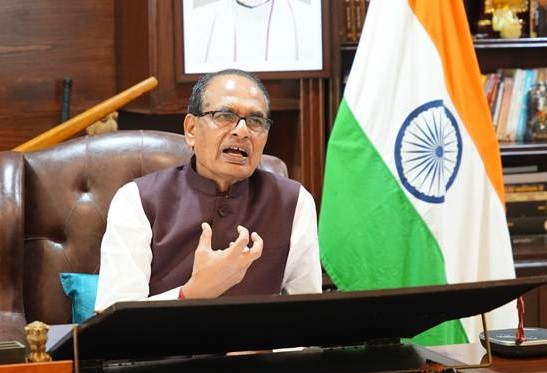
On October 19, 2026, Union Agriculture and Farmers’ Welfare Minister Shivraj Singh Chouhan launched the upgraded Agri Welfare Portal, a mobile-friendly platform meant to give farmers single-window access to schemes, subsidies, financial assistance and agricultural information.
The launch follows the creation of 11 crore Farmer IDs under the Digital Agriculture Mission, and the portal has been described by policy analysts as a clearer route into existing services rather than a new benefit scheme.
Key Highlights
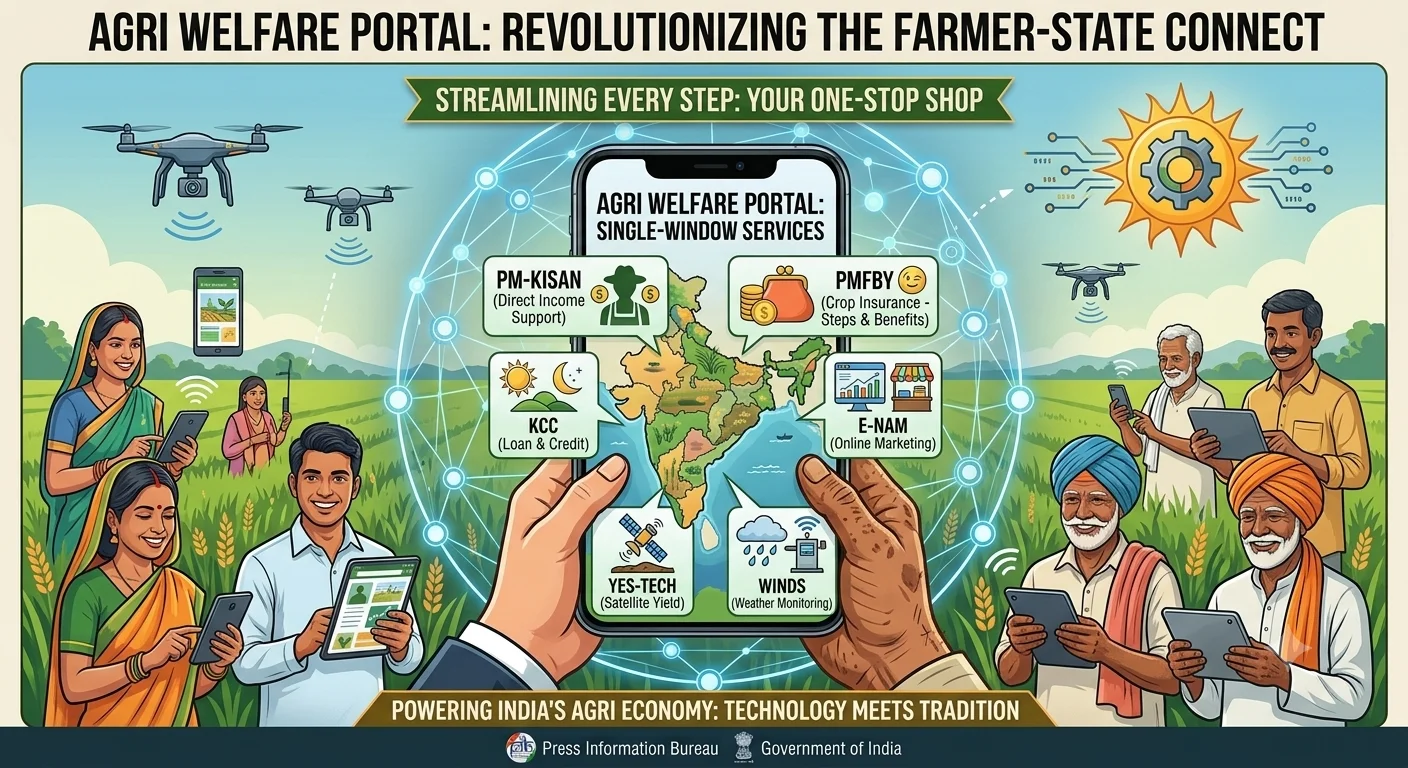
- The portal offers a single-window gateway to schemes and subsidies, with online eligibility checks, application facilities and Direct Benefit Transfer (DBT).
- It is also to carry information on weather, scientific farming practices, seed and fertiliser availability, and market prices.
- Farmer Producer Organisations (FPOs), Primary Agricultural Credit Societies (PACS), scientists, researchers and startups are to be connected on a common digital platform.
- It has been developed in accordance with MeitY’s Digital Brand Identity Manual 3.0 and the Guidelines for Indian Government Websites (GIGW) 3.0, with screen-reader support for persons with disabilities.
- A special training campaign is to be conducted through Krishi Vigyan Kendras (KVKs) to help farmers use the portal and other digital tools.
The Launch: Official Position |
Addressing the launch programme, the Minister said that the portal reflects the Prime Minister’s vision of Digital India and his commitment to farmers’ welfare, and that technology must reach farms and rural communities to make farmers’ lives easier. He stressed that the portal must provide accurate, regularly updated information and employ simple language and processes, particularly for small and marginal farmers and those with limited formal education. Senior officials of the Ministry of Agriculture and Farmers’ Welfare and the National Informatics Centre attended the launch, according to the Ministry’s press release. |
The Agri Welfare Portal at a Glance: Present, Past and Future
Phase | Period | Key development / milestone |
PRESENT | ||
Launch of upgraded portal | October 19, 2026 | The Union Agriculture Minister launched the portal, offering single-window access to schemes, subsidies, eligibility checks, applications and DBT. |
Farmer ID milestone | October 23, 2026 | The target of 11 crore Farmer IDs under the Digital Agriculture Mission was met, five months ahead of the March 31, 2027 deadline. |
PAST | ||
e-NAM | April 14, 2016 | The electronic National Agriculture Market was launched as a digital market platform. |
PM-KISAN | 2019 | Income support of ₹6,000 a year was extended to farmer families through DBT. |
Digital Agriculture Mission | September 2, 2024 | The Union Cabinet approved the Mission with an outlay of ₹2,817 crore (central share ₹1,940 crore). |
FUTURE | ||
KVK training campaign | To follow the launch | Nationwide training through Krishi Vigyan Kendras to build farmers’ familiarity with the portal. |
Mission deadline | March 31, 2027 | The Digital Agriculture Mission period ends; Farmer ID and Crop Sown Registry work continues. |
Bharat-VISTAAR | Budget 2026-27 | A farmer-facing digital layer, reported to carry an allocation of ₹150 crore. |
1. Present: The Upgraded Agri Welfare Portal
In brief: The Union Agriculture Minister on October 19 launched an upgraded portal designed as a single gateway to the Ministry’s schemes, digital services and practical farming information. It does not create a new entitlement; it is intended to simplify access to existing ones.
What Does the Portal Provide?
Feature | Provision |
Scheme access | Details of government schemes, subsidies and financial assistance, with online eligibility checks and application facilities, without visits to multiple offices or websites. |
Direct Benefit Transfer | Facility for DBT, intended to reduce procedural hurdles and intermediaries. |
Information services | Authentic information on weather, scientific farming practices, seed and fertiliser availability, and market prices. |
Stakeholder linkage | A common platform connecting farmers with FPOs, PACS, agricultural scientists, researchers and startups. |
Accessibility | Secure, mobile-friendly interface, designed for rural connectivity, with screen readers and simplified navigation for persons with disabilities. |
Standards | Developed in accordance with MeitY’s Digital Brand Identity Manual 3.0 and the Guidelines for Indian Government Websites 3.0. |
Why Was the Portal Upgraded?
The Ministry stated that the portal seeks to simplify access to services, reduce procedural hurdles and intermediaries, and bring key agricultural initiatives under one roof. The Minister noted that the farmer should not have to approach different government offices or navigate different websites to check eligibility or submit applications.
The upgrade comes at a time when the Farmers’ Registry under AgriStack has reached 11 crore Farmer IDs, providing a digital identity to which services can be linked.
What Are the Advantages and Disadvantages?
Dimension | Advantages | Disadvantages / challenges |
Access | A single gateway reduces the need to visit multiple offices and websites. | The launch did not create a new scheme; the portal’s value lies in routing farmers to existing services. |
Delivery | Online applications and DBT are expected to curtail intermediaries and procedural delay. | Effectiveness depends on accurate, regularly updated information and on the back-end systems of individual schemes. |
Inclusion | Simple language, mobile access and screen-reader support are meant for small and marginal farmers and persons with disabilities. | About 81 per cent of registered farmers are marginal and small holders, and connectivity and digital literacy may constrain use. |
Capacity | KVK-led training is intended to supply local, human support to the digital service. | The training campaign is yet to be rolled out; its scale and timeline have not been specified. |
Data and governance | Common standards (GIGW 3.0) are meant to ensure security and uniformity. | Collection of personal and land-related data engages the Digital Personal Data Protection Act, 2023. |
Takeaway |
The portal is a service-delivery measure, not a benefit scheme. Whether it delivers a genuine single window will depend on the accuracy of its content, the ease of its processes for small farmers, and the quality of last-mile support. |
2. Past: From Mandis to Farmer IDs
In brief: The portal builds upon a decade of digital initiatives in agriculture: the e-NAM market platform (2016), DBT-based income support under PM-KISAN (2019) and, since September 2024, the Digital Agriculture Mission, which seeks to create a digital public infrastructure for farmers.
How Did Digital Delivery in Agriculture Evolve?
The electronic National Agriculture Market (e-NAM) was launched on April 14, 2016. As of early 2026, 1,656 mandis across 23 States and 4 Union Territories had been integrated, with 1.80 crore farmers, 2.73 lakh traders and 4,724 FPOs registered, and cumulative trade of ₹4.84 lakh crore, according to figures drawn from PIB.
Income support under PM-KISAN, at ₹6,000 a year, is transferred directly to farmers’ accounts; the 22nd instalment, released on March 13, 2026, reached 9.32 crore farmers, and cumulative disbursement has exceeded ₹4.27 lakh crore.
On September 2, 2024, the Union Cabinet approved the Digital Agriculture Mission with an outlay of ₹2,817 crore, including a central share of ₹1,940 crore. The Mission rests on AgriStack, a farmer-centric digital public infrastructure comprising three registries: the Farmers’ Registry, geo-referenced village maps and the Crop Sown Registry.
Its other components include the Krishi Decision Support System and Soil Profile Maps. The Farmer ID, a unique digital identity created by linking a farmer’s details with digitised land records, has been described as comparable to Aadhaar for the agricultural ecosystem.
What Do the Data Show?
Table A: Growth of Farmer IDs under AgriStack
Date | Farmer IDs created | Source / note |
November 27, 2025 | 7.63 crore (including 1.93 crore women) | PIB |
February 4, 2026 | 8.48 crore | PIB |
March 19, 2026 | 9.20 crore | Ministry of Agriculture |
August 3, 2026 | 10.31 crore | Government figures |
October 23, 2026 | 11 crore (target met) | PIB; Mission target deadline: March 31, 2027 |
Table B: Digital agriculture indicators
Indicator | Figure |
Digital Agriculture Mission outlay | ₹2,817 crore (central share ₹1,940 crore) |
Farmers receiving Farmer ID-based services | Over 6 crore |
Share of women among registered farmers | About 26 per cent |
Share of marginal and small holders among registered farmers | About 81 per cent |
Digital Crop Survey (Rabi 2025-26) | 648 districts; over 31.3 crore plots |
PM-KISAN beneficiaries (22nd instalment) | 9.32 crore farmers |
e-NAM: mandis integrated | 1,656 across 23 States and 4 UTs |
Sources: PIB; Ministry of Agriculture and Farmers’ Welfare; reports of The Hindu BusinessLine and The Indian Express as compiled by Elets eGov. Figures relate to the dates indicated.
Takeaway |
The portal arrives after the foundations have been laid: an identity layer (Farmer ID), a market platform (e-NAM) and a payment channel (DBT). With 11 crore Farmer IDs created and over 6 crore farmers already receiving ID-based services, the portal is the public-facing interface of a larger digital architecture. |
3. Future: The Way Ahead
In brief: The portal’s success will be tested not at launch but in use: in whether information is accurate and current, whether processes are simple for small farmers, and whether training through KVKs reaches those with limited formal education or connectivity.
What Is the Timeline Ahead?
# | Stage | Description | Status |
1 | Training campaign | A special campaign through KVKs across the country to help farmers use the portal and other digital tools. | Announced |
2 | Integration with registries | Linkage of scheme access with Farmer ID, land records and the Crop Sown Registry under AgriStack. | Ongoing |
3 | Digital Agriculture Mission period | The Mission’s stipulated period ends on March 31, 2027. | Scheduled |
4 | Bharat-VISTAAR | Farmer-facing digital layer under Budget 2026-27, reported at ₹150 crore. | Budgeted |
Which Questions Remain Open?
- Will the content of the portal be updated regularly and verified at the level of each scheme, as the Minister has stressed?
- How many farmers, particularly small and marginal holders, will be reached by the KVK training campaign, and in what time frame?
- Will the portal be integrated with Farmer ID, land records and DBT so that eligibility checks and applications work seamlessly?
- What safeguards will govern the personal and land data of farmers under the Digital Personal Data Protection Act, 2023?
Takeaway |
The portal promises to place the government on the farmer’s mobile. The promise will be fulfilled only if the information is accurate, the process is simple and the last mile is supported by people as well as technology. |
Share this Perspective
Spread rigorous policy evaluation across your professional networks.