
A completed Godavari barrage remains dependent on Chhattisgarh’s clearance as two chief ministers discuss surveys, submergence and compensation.
Key Highlights
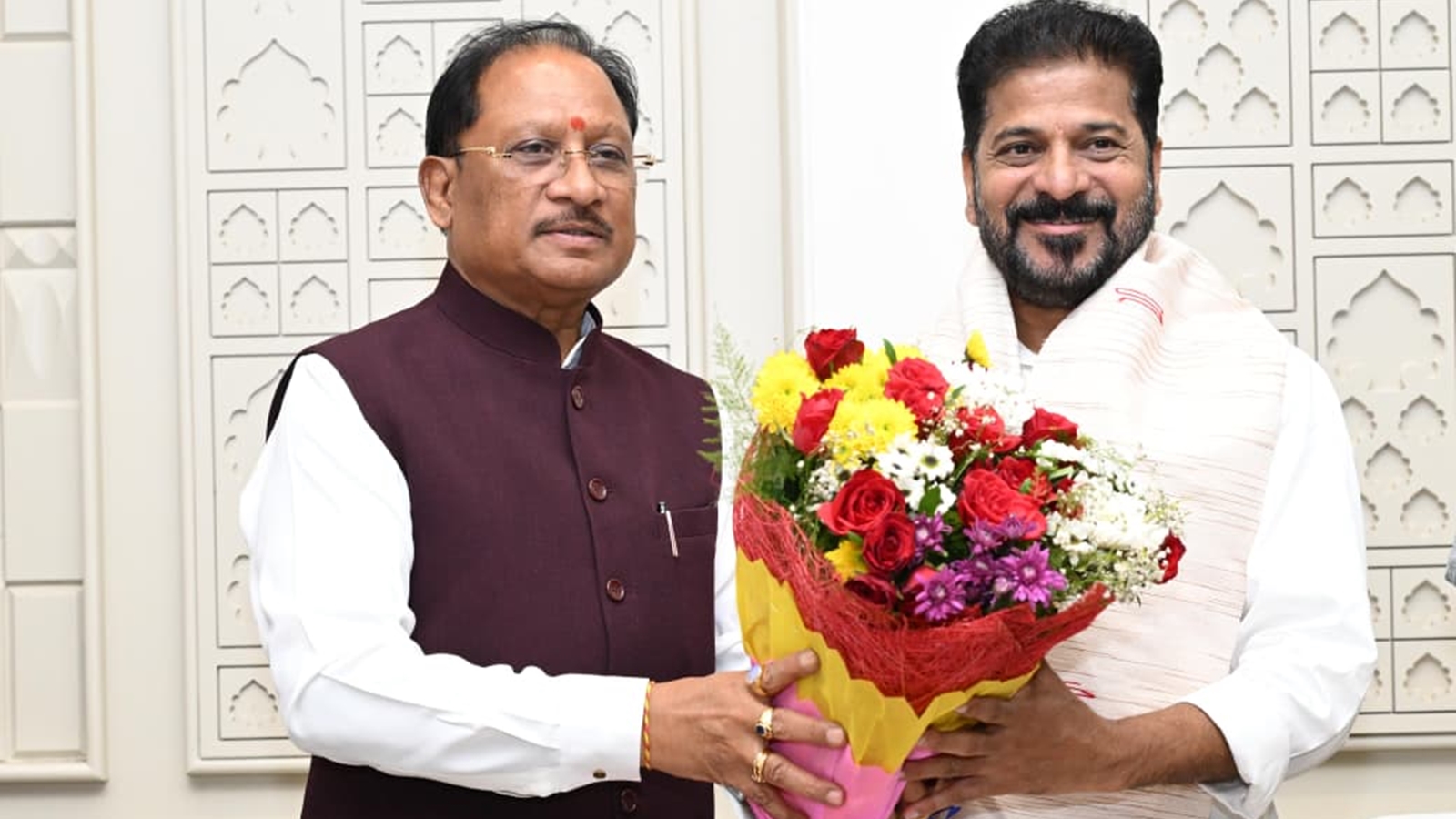
- Telangana Chief Minister A. Revanth Reddy met Chhattisgarh Chief Minister Vishnu Deo Sai in Raipur on November 17, 2026, seeking an NOC for the Sammakka Sagar project.
- Construction was completed in 2021–22, but full operation remains pending because of concerns over the possible submergence of land in Chhattisgarh.
- An IIT Kharagpur study has assessed the backwater impact. Cadastral and LiDAR surveys, along with a Social Impact Assessment, remain part of the process.
- Chhattisgarh has assured Telangana that the NOC process will be expedited, with the next monsoon emerging as an important timeline.
- The discussions underline the need to balance irrigation requirements with land rights, compensation and inter-state cooperation.
A Completed Barrage, but Water Storage Remains an Issue
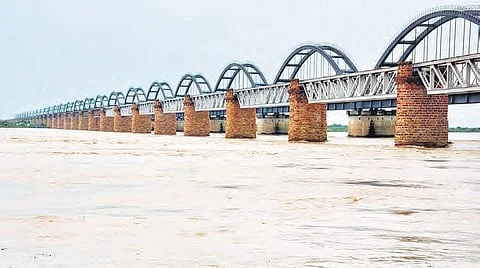
The construction of an irrigation project does not always mean that it can immediately deliver its intended benefits. Telangana’s Sammakka Sagar barrage on the Godavari River is a case in point.
Completed in 2021–22, the project has yet to be operated at its full storage capacity because a key inter-state clearance remains pending. The issue came into focus again on November 17, when Telangana Chief Minister A. Revanth Reddy met his Chhattisgarh counterpart, Vishnu Deo Sai, in Raipur.
Accompanied by Telangana Irrigation Minister N. Uttam Kumar Reddy, Revanth sought Chhattisgarh’s no-objection certificate (NOC) to enable full water storage in the barrage. The meeting focused on the neighbouring state’s concerns over possible land submergence, the surveys required to establish its extent and the compensation that may have to be paid.
Chhattisgarh reportedly assured the Telangana delegation that the NOC process would be expedited. However, the assurance should not be confused with the formal issuance of the certificate. The required assessments and administrative procedures are still part of the process.
Why the Project Needs Chhattisgarh’s Consent?
The Sammakka Sagar barrage is situated at Tupakulagudem in Mulugu district of Telangana. The Godavari River forms a natural boundary between this part of Telangana and Chhattisgarh’s Bijapur district.
When a barrage stores water, its reservoir and backwater can extend beyond the immediate construction site. In this case, the proposed full reservoir level could affect revenue and forest land in Chhattisgarh.
When Telangana approached the Central Water Commission (CWC) for permission to operate the barrage at full capacity, it was asked to obtain Chhattisgarh’s NOC because of the possible impact on land in the neighbouring state.
This has made the issue more complex than a routine operational approval. While Telangana wants to utilise the completed infrastructure, Chhattisgarh needs to establish the extent of the land likely to be affected and determine the appropriate compensation.
The pending clearance therefore reflects the practical challenges of managing infrastructure on a river that connects two states.
From Kantalapally to Tupakulagudem: The Earlier Concerns
The project was initially proposed at Kantalapally. However, the original location raised concerns over the extent of land that could be submerged in Chhattisgarh.
Reports indicated that the earlier proposal could have affected around 11,408 acres of land and 17 Adivasi villages, along with security infrastructure in the region. To reduce the likely impact, the project site was subsequently shifted to Tupakulagudem.
The revised location helped reduce the estimated submergence, but it did not eliminate the need for an assessment of the reservoir’s backwater impact.
The project was taken up in 2017 and completed in 2021–22. At its full reservoir level of 83 metres, the barrage has a storage capacity of 6.94 TMC. It is intended to help Telangana use Godavari waters for irrigation and drinking water requirements, particularly in drought-prone, backward and tribal regions.
The location change illustrates how infrastructure planning often requires adjustments when environmental, geographical and community concerns emerge during the process.
Three Surveys and the Road to Clearance
The NOC process is linked to three important assessments intended to establish the likely impact of the reservoir on Chhattisgarh.
The first is the backwater impact assessment conducted by IIT Kharagpur. The institute has completed the study and submitted its report to the Chhattisgarh government. According to reports, the study estimated that around 33 acres of land in Chhattisgarh could be submerged when the barrage reaches its full reservoir level.
The second assessment involves cadastral mapping and LiDAR surveys. A cadastral survey identifies land parcels, ownership details and boundaries, helping authorities distinguish between privately held land, revenue land and forest land. LiDAR technology uses aerial measurements to map the elevation and geographical features of the area.
These findings are important for identifying affected land and determining the basis for compensation.
The third component is the Social Impact Assessment (SIA). It is intended to examine the consequences of possible land submergence for residents, livelihoods, and local communities. Five Gram Sabhas are planned in Tarlaguda and four surrounding villages in Chhattisgarh.
The completion of these exercises will help the state government assess the extent of the impact before taking a final decision on the NOC.
Land, Livelihoods and the Question of Compensation
The issue is not limited to the number of acres that may be affected. For people living along the Godavari, agricultural land is closely connected with their income, food security and everyday lives.
Even a relatively small area of submergence can affect individual households, particularly where farmland is the principal source of livelihood. The impact may also extend to access routes, community resources and local infrastructure.
This is why the Social Impact Assessment and village-level consultations matter. Technical surveys can establish the geographical extent of submergence, but discussions with residents are necessary to understand its social and economic consequences.
Telangana has reportedly conveyed its willingness to provide funds for land acquisition, compensation and rehabilitation in Chhattisgarh in accordance with applicable rules and regulations.
The commitment is an important part of the discussions, but its implementation will depend on the findings of the surveys and the identification of affected landholders. A transparent compensation process will be essential to addressing concerns and building confidence among local communities.
Telangana’s Irrigation Needs and the Political Push
For Telangana, the Sammakka Sagar project is part of a wider effort to strengthen irrigation infrastructure and improve water availability in regions facing uncertain rainfall.
During the meeting, Revanth Reddy highlighted the state's increasing water requirements amid drought-like conditions attributed to El Niño. He urged Chhattisgarh to allow water storage in the barrage and cooperate in completing the remaining formalities.
The meeting in Raipur followed Revanth’s discussions with Prime Minister Narendra Modi in New Delhi, where he had also sought the Centre’s intervention in securing the pending clearance.
The Telangana government has maintained that the barrage is ready for operation and that the remaining inter-state issue should be resolved so that the investment can be put to use.
Chhattisgarh, meanwhile, has indicated that the process will be taken forward after the required assessments. Reports suggest that the state is aiming to complete the process before the next monsoon, although the formal NOC remains subject to the necessary procedures.
The two chief ministers' meeting has therefore provided a political opening, but the outcome will depend on the completion of the technical and administrative work.
A Test of Cooperative Federalism
The Sammakka Sagar issue offers a wider example of how infrastructure projects can test coordination between states. Rivers cross political boundaries, while the consequences of dams and barrages may extend beyond the state in which they are constructed.
The Constitution provides a framework for managing water resources and inter-state river issues. Entry 17 of the State List covers water, irrigation, canals and related matters, subject to the provisions of Entry 56 of the Union List. Entry 56 empowers Parliament to regulate and develop inter-state rivers and river valleys when such regulation is declared expedient in the public interest.
Article 262 also enables Parliament to provide for the adjudication of disputes relating to the use, distribution or control of waters of inter-state rivers and river valleys.
However, the immediate Sammakka Sagar issue is centred on the NOC and the possible impact of reservoir operations on land in Chhattisgarh. It is not simply a dispute over the allocation of river water.
The situation demonstrates why cooperative federalism requires more than meetings between political leaders. It also depends on reliable technical assessments, transparent decision-making, consultation with affected communities and timely coordination between government departments.
The Clearance That Will Determine the Next Step
The Sammakka Sagar barrage is physically complete, but its full utilisation remains tied to the outcome of discussions between Telangana and Chhattisgarh.
The completion of the cadastral and LiDAR surveys, the Social Impact Assessment and the consultations with affected villages will be important steps towards resolving the pending issue. The findings will help establish the extent of land impact and the compensation required.
For Telangana, an early decision would allow the state to make greater use of the Godavari for irrigation and drinking water requirements. For Chhattisgarh, the process must ensure that the interests of affected landholders and communities are adequately protected.
The meeting between Revanth Reddy and Vishnu Deo Sai has brought the two governments back to the negotiating table. The next challenge is to translate the assurance of expedited action into a formal decision.
Ultimately, the success of the project will depend not only on the infrastructure already built, but also on the ability of two states to resolve outstanding concerns through consultation, compensation, and cooperation.
Share this Perspective
Spread rigorous policy evaluation across your professional networks.