

India's Ganges River dolphin recovery efforts demonstrate how species protection, river rejuvenation and community participation can contribute to long-term ecosystem restoration.
Key Highlights
- UNEP's October 2026 report, Nature's Comeback, highlights the recovery of Ganges river dolphins among global ecosystem restoration efforts.
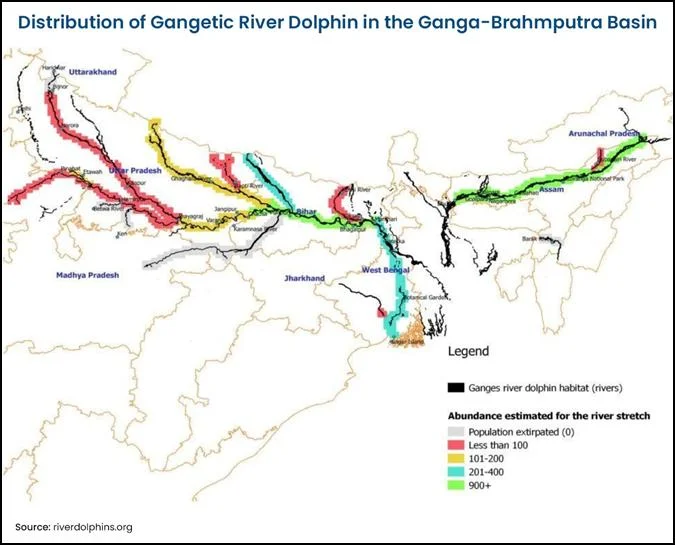
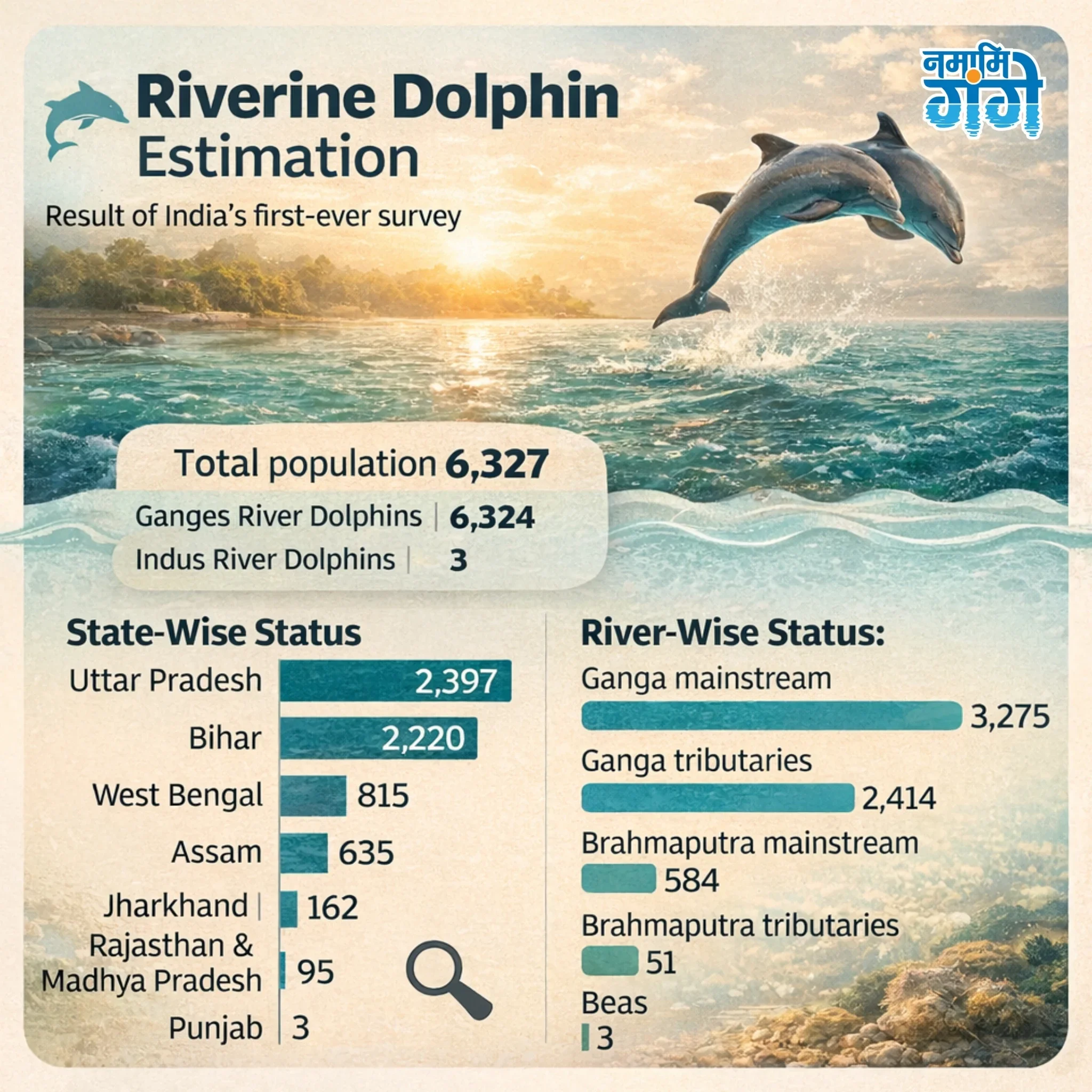
- India's first nationwide assessment recorded approximately 6,324 Ganges river dolphins across its river systems.
- Project Dolphin, Namami Gange and the Comprehensive Action Plan for Conservation of River Dolphins provide the policy framework.
- Pollution, reduced river flows, fishing-net entanglement and habitat fragmentation continue to threaten the species.
- Scientific monitoring, community participation and sustainable livelihoods remain essential for long-term conservation.
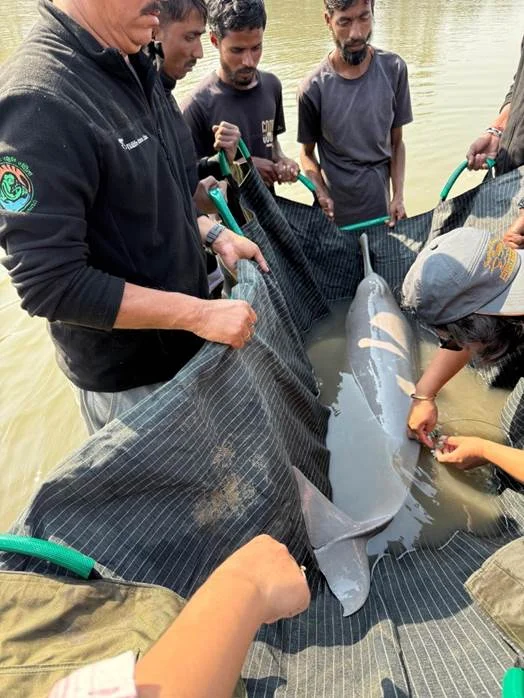
The Ganges Dolphin: An Indicator of River Health
The health of a river is not measured only by the volume of water flowing through it. Its biodiversity also reveals whether the ecosystem is functioning properly. The Ganges river dolphin, one of India's most threatened freshwater species, offers an important indication of the condition of the country's river systems.
Locally known as Susu, the Ganges river dolphin (Platanista gangetica) inhabits the Ganga-Brahmaputra-Meghna river system. It relies on echolocation to navigate and locate prey because its eyesight is extremely limited. India declared it the National Aquatic Animal in 2009. The species is classified as Endangered on the IUCN Red List and receives protection under Schedule I of the Wildlife (Protection) Act, 1972.
Its survival depends on adequate water flows, suitable breeding and feeding habitats, and a healthy aquatic food chain. Therefore, protecting the dolphin is closely connected with restoring the river ecosystem itself.
UNEP Recognition Puts India's Conservation Efforts in Focus
On 29 October 2026, the United Nations Environment Programme (UNEP) released its report, Nature's Comeback – Scaling Ecosystem Restoration for People and Planet. Published jointly with the Food and Agriculture Organization (FAO) and the Secretariat of the Convention on Biological Diversity, the report provides a global assessment of ecosystem restoration.
It found that restoration activities were underway across 252 million hectares in 149 countries, supporting more than one million green jobs. The report also highlighted the recovery of species such as Ganges river dolphins in India, mountain gorillas in East Africa, jaguars in Brazil and snow leopards in Kyrgyzstan.
The recognition brings international attention to India's efforts to protect an endangered freshwater species while improving the ecological condition of its river habitats.
It also reinforces a wider environmental lesson: species recovery cannot be separated from ecosystem restoration. Protecting wildlife requires action on pollution, habitat degradation, and the human activities that place pressure on natural resources.
India's Conservation Strategy: From Species Protection to River Rejuvenation
India's approach to dolphin conservation has gradually expanded beyond the protection of individual animals. It now combines scientific assessment, habitat conservation, pollution control, and public participation.
Project Dolphin
Announced on 15 August 2020, Project Dolphin aims to strengthen the conservation of riverine and marine dolphins in India. Its focus includes population assessment, habitat protection, research, and measures to reduce threats such as accidental entanglement in fishing nets.
Comprehensive Action Plan for Conservation of River Dolphins (2022–2047)
The action plan provides a long-term framework for river dolphin conservation. It emphasises scientific research, regular population monitoring, habitat protection, public awareness and coordination among government agencies.
Namami Gange Programme
Launched in June 2014, Namami Gange aims to rejuvenate the Ganga through sewage treatment, industrial pollution control, river cleaning and biodiversity conservation. The programme was recognised as a UN World Restoration Flagship in 2022.
Its work is relevant to dolphin conservation because improved water quality and river management can support aquatic biodiversity.
Together, these initiatives reflect a shift towards an integrated approach in which species protection and river rejuvenation are treated as connected priorities.
Population Assessment: What Do the Numbers Reveal?
Reliable population data is essential for planning conservation measures. Without regular surveys, it becomes difficult to identify vulnerable habitats or assess whether conservation efforts are producing results.
India's first nationwide river dolphin assessment, conducted during 2021–2023 by the Wildlife Institute of India in collaboration with State Forest Departments, estimated approximately 6,327 river dolphins across the country. This included 6,324 Ganges river dolphins and three Indus river dolphins.
The survey covered approximately 8,507 kilometres across 28 rivers. It provided a scientific baseline for understanding dolphin distribution and identifying important conservation areas.
The next phase of population assessment was launched in January 2026 under Project Dolphin. The expanded exercise aims to improve information on riverine and estuarine dolphin populations, habitat conditions and threats.
These assessments are important, but population figures alone cannot establish long-term recovery. Repeated surveys, consistent scientific methods and habitat monitoring will be necessary to understand changes over time.
Conservation on the Ground: Rescue and Community Participation
Government policies can protect wildlife only when they are translated into practical action. Along the Ganga and its tributaries, rescue operations, research facilities and community networks are becoming important parts of the conservation effort.
India's first Dolphin Rescue Ambulance was inaugurated on 13 January 2026 at the Wildlife Institute of India in Dehradun. It was developed to support the safe rescue and translocation of dolphins found in distress. Government-reported figures also recorded eight Ganges river dolphins rescued and released.
Community participation has received attention through initiatives such as the Soons-Saathi network and Dolphin Clubs. Residents, fishers and trained volunteers are encouraged to report dolphin sightings, identify potential threats and support conservation awareness.
According to government-reported figures, the Soons-Saathi network included 100 volunteers across 250 kilometres. Around 160 personnel had received training, nearly 2,000 community members had been sensitised, and 15 Dolphin Clubs had been established.
Such participation is significant because people living near rivers often have direct knowledge of local water conditions and changes in wildlife behaviour. Their involvement can improve early reporting and strengthen cooperation between communities and conservation authorities.
Major Threats to the Ganges River Dolphin
Despite policy initiatives and conservation activities, the Ganges river dolphin continues to face several interconnected threats.
- Water pollution: Untreated sewage, industrial discharge, agricultural runoff, and plastic waste affect water quality and aquatic food chains. Pollution can also reduce the availability of suitable habitats.
- Declining river flows: Dams, barrages and excessive water extraction can reduce water depth and disturb the natural movement of dolphins between river stretches.
- Fishing-related threats: Dolphins may become trapped in fishing nets and drown. Overfishing can further reduce the availability of prey.
- Habitat fragmentation: Physical barriers can isolate dolphin populations and affect breeding, feeding, and movement across river systems.
- Human activities: Dredging, sand mining and heavy boat traffic can disturb sensitive habitats and increase pressure on aquatic species.
These threats require coordinated responses. Pollution control alone cannot secure dolphin habitats if river flows remain inadequate or physical barriers continue to fragment the ecosystem.
Connecting River Conservation with Global Environmental Goals
India's dolphin conservation efforts are connected with wider international commitments on biodiversity and ecosystem restoration.
The UN Decade on Ecosystem Restoration (2021–2030) calls for countries to prevent, halt and reverse ecosystem degradation. It recognises the importance of restoring terrestrial, freshwater and marine ecosystems for biodiversity, climate resilience and human well-being.
The Kunming-Montreal Global Biodiversity Framework, adopted in 2022, includes Target 2, which calls for at least 30 per cent of degraded terrestrial, inland water, marine and coastal ecosystems to be under effective restoration by 2030.
Dolphin conservation also contributes to several Sustainable Development Goals:
- SDG 6 – Clean Water and Sanitation: Improving water quality and reducing river pollution.
- SDG 8 – Decent Work and Economic Growth: Supporting sustainable livelihoods and green employment.
- SDG 13 – Climate Action: Strengthening ecosystem resilience.
- SDG 14 – Life Below Water: Protecting aquatic biodiversity.
- SDG 15 – Life on Land: Conserving biodiversity and restoring ecosystems.
These connections show that freshwater conservation is not limited to wildlife protection. It is also linked to public health, economic security, climate resilience, and the well-being of communities.
Making Conservation Sustainable
The next phase of India's dolphin conservation efforts must focus on converting policy commitments into measurable improvements across river ecosystems.
First, scientific monitoring needs to be strengthened. Regular population surveys, habitat mapping and research into dolphin movement can help identify vulnerable river stretches and assess conservation outcomes.
Second, pollution control must remain a priority. Sewage treatment facilities need to operate effectively, while industrial discharge and agricultural runoff require consistent monitoring and enforcement.
Third, environmental flows must be considered in river management. Dams, barrages and water-use decisions should account for the ecological requirements of aquatic species.
Fourth, local communities and fishing groups should be treated as active conservation partners. Awareness programmes, alternative livelihood opportunities and appropriate support can help reduce conflicts between wildlife protection and economic needs.
Finally, stronger coordination between the Centre, State Governments, research institutions and local authorities is essential. River ecosystems cross administrative boundaries, making cooperation necessary for effective conservation.
Restoring the River, Securing the Future
The Ganges River dolphin represents more than the survival of an endangered species. Its recovery is closely connected with the ecological condition of one of India's most important river systems.
India has established a policy framework through Project Dolphin, the Comprehensive Action Plan for Conservation of River Dolphins and Namami Gange. Scientific assessments, rescue facilities and community networks have further strengthened these efforts.
However, international recognition must be followed by sustained action. The real measure of success will be cleaner water, adequate river flows, connected habitats, healthy fish populations, and secure livelihoods for communities living along the river.
Ultimately, protecting the Susu means protecting the river that sustains it. The future of the Ganges river dolphin will depend on India's ability to make ecosystem restoration a continuous priority in environmental governance and development planning.
Share this Perspective
Spread rigorous policy evaluation across your professional networks.