
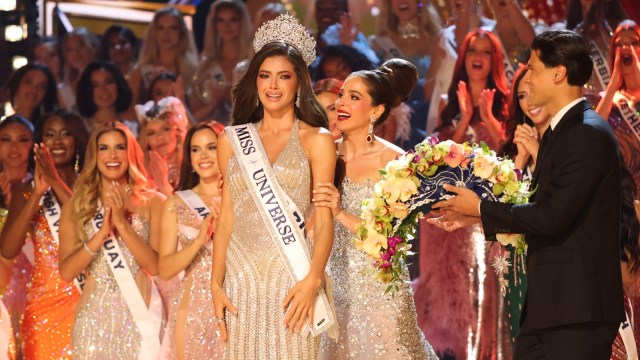
Puerto Rico celebrated a historic Miss Universe victory, while disputes over ownership, judging, participation and safety raised questions about the pageant’s credibility.
Key Highlights
- Historic win: Jennifer Barreto won Puerto Rico’s sixth Miss Universe crown on home soil.
- Ownership dispute: Rival factions continue to contest control of the Miss Universe Organisation.
- Judging concerns: Allegations of preselected finalists and limited scoring transparency have raised questions.
- Contestant withdrawals: Franchise disputes and visa barriers prevented several countries from participating.
- Safety concerns: Past contestant mistreatment, an alleged injury and runway incidents renewed welfare concerns.
- India’s performance: Kaziah Liz Mejo reached the Top 30 but missed the Top 12.

A Historic Home Victory Amid Organisational Turmoil
Jennifer Barreto of Puerto Rico was crowned Miss Universe 2026 at the 75th edition of the international beauty pageant, held in San Juan on November 24. The victory was particularly significant for the host territory, which secured its sixth Miss Universe title in front of a home crowd.
The 27-year-old received the crown from outgoing winner Fátima Bosch of Mexico. The Dominican Republic’s Melissa Núñez finished as the first runner-up, while Venezuela’s Clara Vegas Goetz secured the second runner-up position. Contestants from the Philippines and New Zealand also reached the Top Five.
A total of 116 contestants from countries and territories participated in the anniversary edition. India was represented by Kaziah Liz Mejo, who made it to the Top 30 but could not progress to the Top 12.
The result gave Puerto Rico a moment of celebration, but the competition had arrived at its milestone edition amid an unusually difficult period. Questions over the organisation’s ownership, allegations concerning judging procedures, withdrawals by national contestants and concerns about event management had already placed the pageant under scrutiny.
The controversies are not limited to one edition. They point to wider questions about how one of the world’s most recognisable beauty pageants is governed, how its winners are selected and how contestants are treated.
1. Who Controls the Miss Universe Organisation?
The most significant challenge facing the pageant has been the dispute over ownership and corporate authority.
In 2022, Thailand-based media company JKN Global Group, led by Anne Jakkaphong Jakrajutatip, acquired the Miss Universe Organisation for approximately $20 million. The acquisition was presented as a new phase for the brand, with expectations of expanding its international reach and commercial opportunities.
However, JKN subsequently faced financial difficulties and filed for bankruptcy in 2023. In 2024, a 50 per cent stake in the organisation was sold to Mexican businessman Raúl Rocha Cantú. The change in ownership did not settle the questions surrounding the organisation’s management.
Instead, rival groups have since issued competing statements about corporate authority, governance and the legitimacy of decisions taken on behalf of the Miss Universe brand. Separate websites and public communications have added to the confusion, leaving national franchise holders, sponsors and other stakeholders facing uncertainty over which authority speaks for the organisation.
The dispute also became relevant to the staging of the 2026 event. Conflicting claims were made about the venue for the next edition, with one faction announcing Vietnam while the organisers at the Puerto Rico finale announced Costa Rica as the proposed host for 2027. The competing announcements highlighted the extent of the disagreement.
Financial accountability has also come under attention. Puerto Rico’s Senate examined the use of approximately $8.7 million in public funds committed to hosting the 75th edition. The scrutiny raised questions about contractual responsibilities and the oversight of public money used for an international event.
The dispute is therefore not simply a disagreement between business owners. It has implications for the pageant’s franchise network, commercial partnerships and public credibility. For a global competition that depends on national organisers and sponsors, clarity over ownership and decision-making remains essential.
2. Judging Transparency and Allegations of a Predetermined Result
The credibility of a beauty pageant depends heavily on the confidence contestants and audiences place in its judging process. Miss Universe has faced questions on this front following allegations made during the 2025 edition in Thailand.
Before the 2025 final, two judges resigned. One of them, Lebanese-French composer Omar Harfouch, alleged that an unofficial jury had selected finalists before the formal judging process and that the eventual result had been predetermined.
Harfouch also alleged that business connections involving Rocha and the father of Mexico’s representative, Fátima Bosch, could have influenced the outcome. Rocha denied the allegation, maintaining that his company’s contract with Mexico’s state-owned oil company, Pemex, had been entered into before he acquired his stake in Miss Universe.
The Miss Universe Organisation rejected Harfouch’s claims and subsequently initiated legal action against him, alleging defamation and breach of contract. The allegations have therefore remained contested and should not be treated as established findings.
However, questions about the process were also raised by other judges. Concerns were reported over the absence of independent auditing and the lack of publicly accessible scoring records. Former Miss Universe winner and 2025 judge Natalie Glebova also questioned whether the scores submitted by judges had a meaningful influence on the final outcome.
The concerns continued into the 2026 edition. The nine-member judging panel was announced only a day before the final, a relatively late disclosure compared with previous years.
The issue is not necessarily whether a particular contestant deserved to win. It is whether the selection process is sufficiently transparent for contestants, national directors and viewers to have confidence in the result. Clear judging criteria, independent oversight and timely disclosure of relevant information could help address these concerns.
3. Why Were Contestants from Several Countries Missing?
The 75th edition was expected to bring together representatives from across the world. However, contestants from several countries were unable to participate, with franchise disputes and visa-related difficulties emerging as major reasons.
Six Southeast Asian countries — Thailand, Vietnam, Laos, Malaysia, Singapore and Indonesia — were affected by a dispute over the validity of their national franchise arrangements. The disagreement between rival groups within the Miss Universe structure resulted in their representatives being excluded from the 2026 competition.
Visa and travel barriers created another challenge. Contestants from countries including Nepal, Angola, Zambia, the Republic of the Congo and South Sudan faced difficulties in reaching the host territory. Zimbabwe’s representative also encountered visa delays, with reports indicating that approval came after preliminary activities had begun.
Other withdrawals were linked to different circumstances. France’s representative withdrew amid concerns over the management of the competition, while financial constraints were cited in some other cases.
The absence of contestants from several countries affected the international representation of the anniversary edition. For a competition that presents itself as a global platform for women, participation depends not only on national selection but also on functioning franchise agreements, administrative coordination and the ability of contestants to travel.
The edition also witnessed political sensitivities around national representation. Israel’s contestant, Danielle Yablonka, faced boos from sections of the audience during the national costume event after presenting an outfit referencing Jerusalem and peace. The episode illustrated how contestants can become caught in wider political debates, even when the event is intended to focus on culture and individual participation.
These developments underline the need for clearer franchise rules and better coordination between the international organisation and national pageant authorities. Contestants should not be left uncertain about their eligibility because of disputes taking place at the organisational level.
4. Contestant Safety and Treatment Under the Spotlight
Questions about how contestants are treated have also become a major concern for the pageant.
During the 2025 competition in Thailand, a confrontation between national pageant director Nawat Itsaragrisil and Mexico’s Fátima Bosch drew widespread attention. Bosch was publicly reprimanded over her participation in promotional activities. The incident escalated when security personnel were called, prompting several contestants to leave the event in solidarity with her.
Itsaragrisil later apologised, but the episode raised questions about the conduct expected from pageant officials and the professional treatment of participants.
Another serious concern involved Jamaica’s Gabrielle Henry, who reported suffering a significant brain injury after falling from the stage during the 2025 competition. She subsequently filed a lawsuit against the Miss Universe Organisation, alleging negligence. The allegations are part of a legal dispute and have not been presented here as a judicial finding.
Safety concerns resurfaced in Puerto Rico in 2026 when videos from a beach runway event showed contestants struggling to maintain their balance on a makeshift surface while walking in high heels. The Miss Universe Organisation distanced itself from the event, stating that it had been independently organised.
The incidents have brought attention to the responsibilities of organisers towards contestants. Stage design, runway surfaces, rehearsal conditions, emergency arrangements and the conduct of officials are not minor logistical matters. They directly affect the safety and dignity of participants.
A competition that attracts contestants from across the world must ensure that professional standards are maintained throughout the event, not just during the televised finale.
5. Is the Traditional Beauty Pageant Format Keeping Pace with Changing Times?
Miss Universe has undergone changes in an effort to reflect evolving ideas about women's participation and representation. Yet the competition continues to face questions about the standards on which contestants are assessed and the relevance of its traditional format.
For decades, the pageant was associated with a narrow idea of beauty, with physical appearance and stage presentation occupying a central place. The format has gradually been expanded. From 2023, married women and mothers were permitted to compete, while the upper age limit of 28 was removed in 2024.
These changes widened eligibility and recognised that a contestant's opportunities should not be restricted by marital status, motherhood or an arbitrary age ceiling. The participation of women with different personal and professional backgrounds has also helped broaden the conversation around representation.
However, the competition continues to include segments such as the swimsuit round, which has remained a subject of debate. Supporters see these segments as part of the pageant's established format, while critics question whether they reinforce conventional beauty expectations.
The wider challenge is to balance tradition with changing public expectations. A modern international platform is increasingly expected to recognise contestants for their communication skills, professional achievements, social initiatives and ability to engage with issues beyond the stage.
The question is not whether beauty pageants should abandon their identity altogether. It is whether their evaluation criteria and public messaging adequately reflect the diversity and aspirations of the women they claim to represent.
Commercial Pressures and the Future of a Global Brand
Miss Universe is also a commercial enterprise. Its revenue model depends on national franchise fees, broadcast rights, sponsorships and the international visibility generated by the competition. The winner's year-long role involves public appearances, promotional commitments and advocacy activities, giving the title value beyond the coronation night.
That commercial structure makes organisational stability particularly important. Franchise holders need predictable rules, sponsors require confidence in the brand, and broadcasters depend on an event that can attract audiences without being overshadowed by disputes.
The controversies surrounding the 2025 and 2026 editions have placed those relationships under pressure. Ownership disagreements can create uncertainty over contracts and decision-making, while judging allegations and contestant withdrawals can affect public confidence.
At the same time, the pageant continues to command a strong following in several parts of the world, particularly in Latin America and parts of Asia. Its ability to bring together contestants from different countries remains a significant part of its appeal.
The challenge for the organisation is to ensure that the commercial value of the brand is supported by transparent governance, credible competition procedures and consistent standards of contestant welfare.
What Lies Ahead for Miss Universe?
Puerto Rico's victory has provided the Miss Universe Organisation with a celebratory moment in its 75th year. Jennifer Barreto's home-soil win will remain an important milestone for the territory and for the pageant's history.
But the anniversary edition has also exposed issues that cannot be resolved through a successful finale alone. The ownership dispute needs greater clarity, judging procedures require public confidence, national franchises need consistent rules, and contestant safety must remain a priority.
The organisation's future will depend not only on the popularity of its winner or the scale of its televised production, but also on how effectively these concerns are addressed.
For a competition that has operated for more than seven decades, the 75th edition offers an opportunity to review its governance and reaffirm the standards expected of a global platform. The crown may have found a new home in Puerto Rico, but the questions surrounding the institution remain.
Share this Perspective
Spread rigorous policy evaluation across your professional networks.